December 28th, 2005
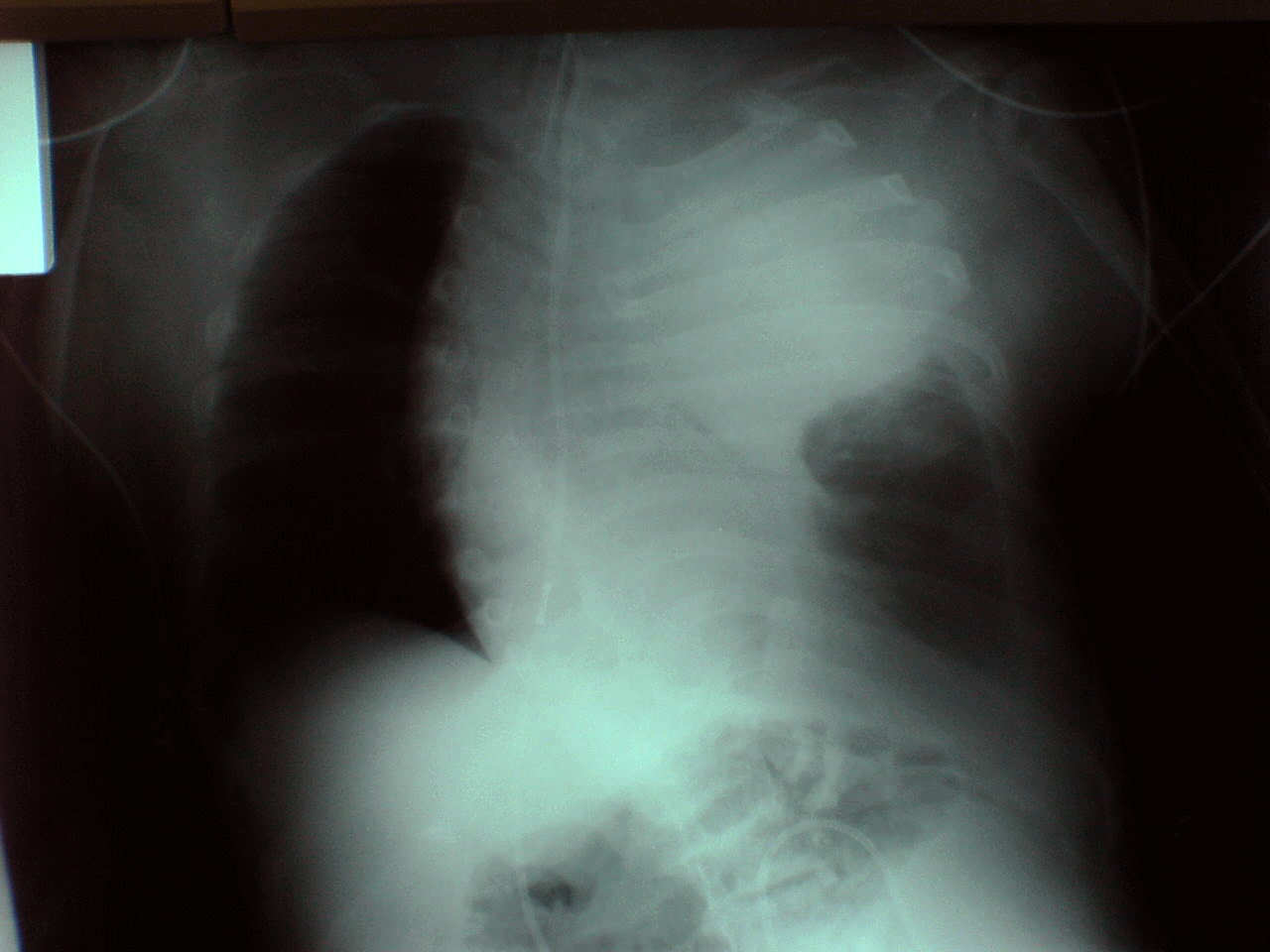
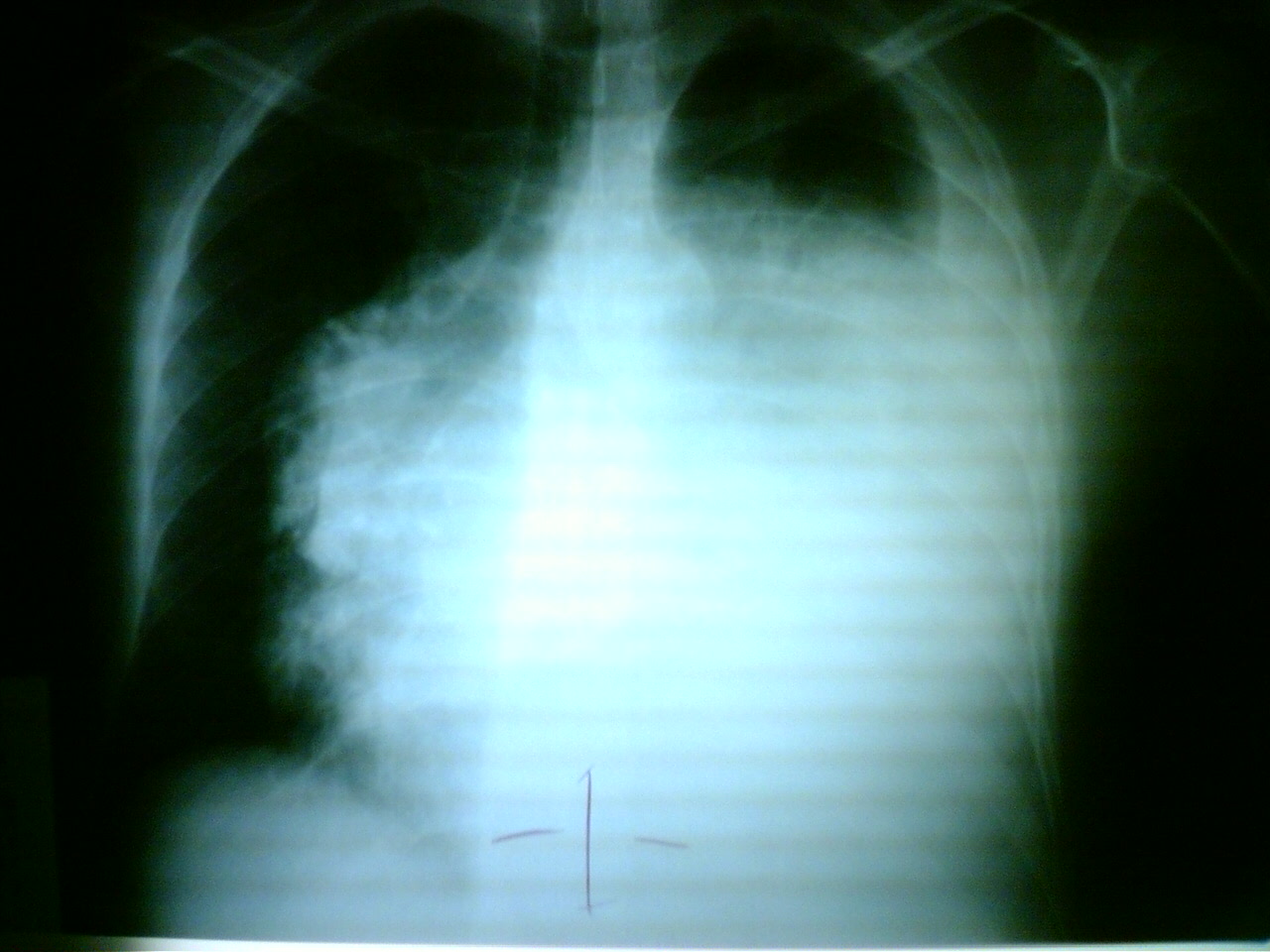
This is a rare complication of subclavian venopuncture:
Inadvertent subclavian arterial puncture
In inexperienced hands it could be a fatal procedure. So, in this case, it was too late when we try to stop that massive bleeding after a surgery interconsultation.
Regards,
Jon Mikel Iñarritu, M.D.
technorati tags: hemomediastinum, subclavian venopuncture, mediastinal hematoma, surgery, medicine, medicina, unbounded medicine
Posted in Medical Images | 3 Comments »
December 16th, 2005
Posted in Medical Images | 1 Comment »
December 15th, 2005
50 y/o woman history of respiratory simptoms.


Posted in Medical Images | No Comments »
December 14th, 2005
This woman has this cutaneous lesions distributed all over the body. She has history of vitiligo.

Pemphigus and bullous pemphigoid.
These are autoimmune blistering diseases. They are caracterized by the production of antibodies directed against different epitopes, resulting in intraepidermal blistering in pemphigus and subepidermal blistering in pemphigoid. The term pemphigus comes from the greek, pemphix, that means bubble. It was used to describe most blistering diseases until 20th century.
Pemphigus
Pemphigus is a group of rare, chronic, autoimmune and potentially fatal diseases of mucous membranes and skin.Three types of pemphigus have been described:
Pemphigus vulgaris
Pemphigus foliaceus
Paraneoplastic pemphigus
Is caracterized by the production of autoantibodies, in pemphigus vulgaris IgG, against adhesion proteins. This alters the intercellular cement that holds epidermal cells together. Resulting in blister formation. Clinically is caracterized by flaccid bullae that tipically begin in the oropharynx and then may spread to involve the skin. With a predilection for the scalp, face, chest, axillae and groin.
Bullous Pemphigoid
Mostly afects persons 60 yeard of age and older. Pemphigoid refers to pemphigus-like blistering disease but is less aggressive than pemphigus vulgaris. It is also a chronic and recurrent disease of autoimmune origin. As in pemphigus vulgaris, the precise reason for the formation of autoantibodies is unkown. A small group of patient bullous pemphigoid is drug-induced. Penicillamine and furosemide are the most frequently implicated. A common presentation is a widespread blistering eruption in a middle age or eldery person who is taking multiple medication.
The case above was diagnosed as bullous pemphigoid.
Regards,
Gerardo Morales-Mora, M.D.
Posted in Medical Images | 1 Comment »
December 14th, 2005
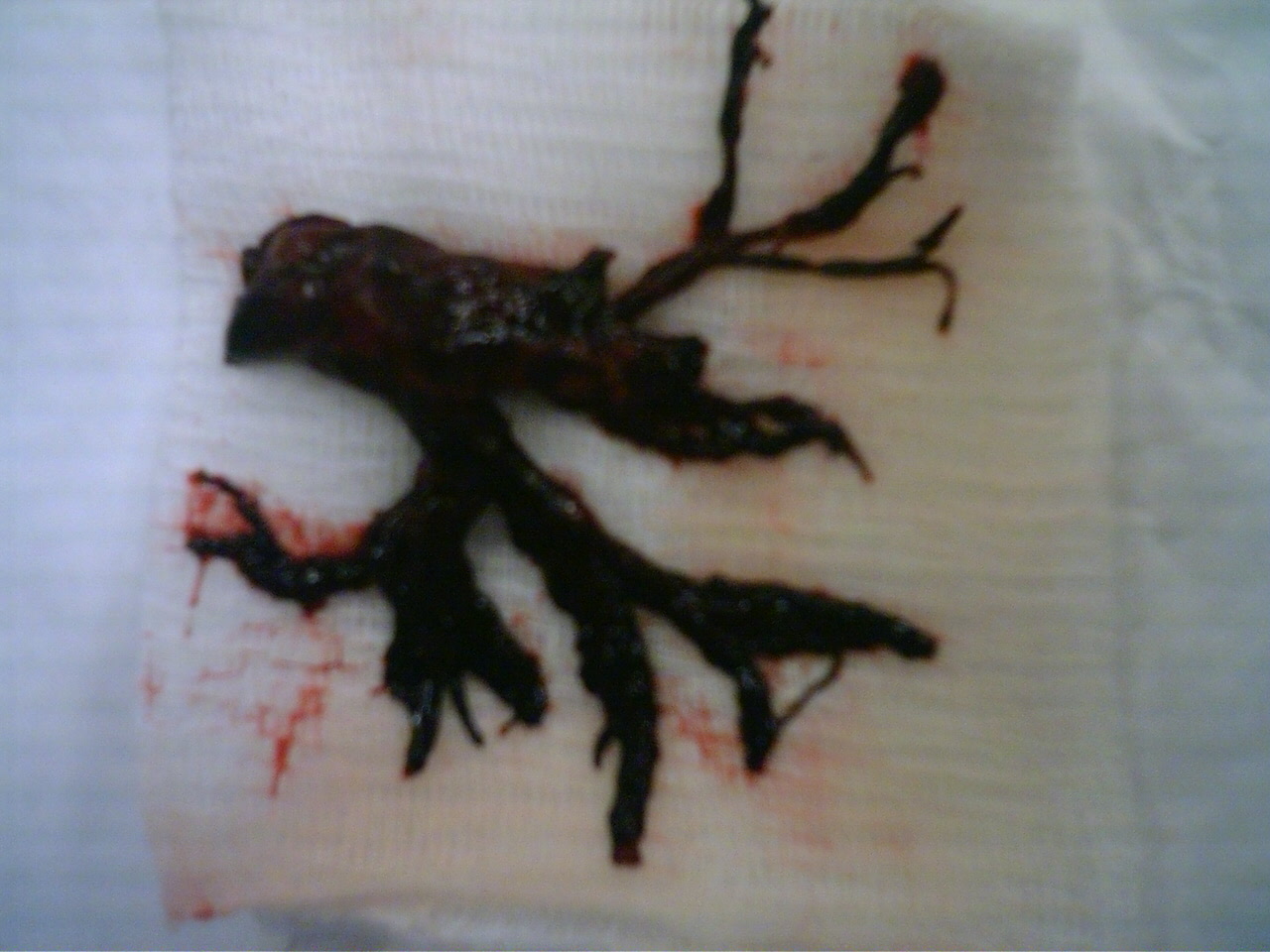
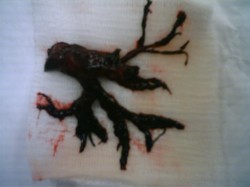
A friend from the “INER” National Institute for respiratory diseases, show me this image. It was taken after a extraction from bronchoscopy in a man with atelectasis of the lung.
Regards,
Gerardo Morales, M.D.
Posted in Medical Images | 4 Comments »
December 13th, 2005
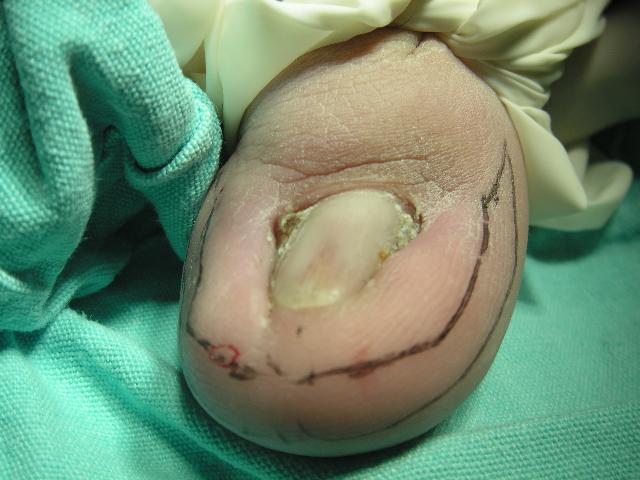
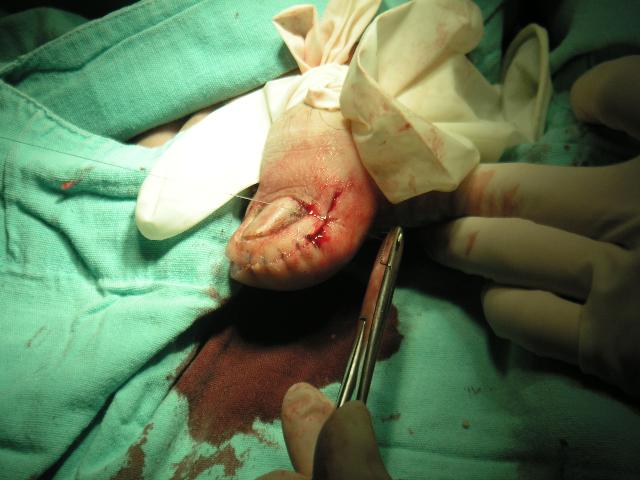
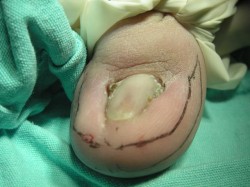
The patient is a young man with onychocryptosis secondary to overweight. At the images below a matricectomy with remotion of soft tissue are shown. This procedure is performed bedside in few minutes and only need local anesthesia. The goal is to release the nail from the surrounding tissue.
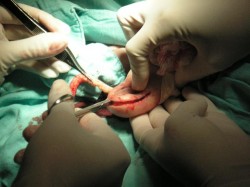
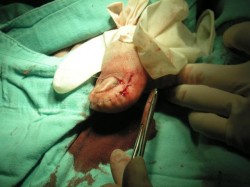
Gerardo Morales, M.D.
Posted in Medical Images | 12 Comments »
December 12th, 2005
Percutaneous apiration of a pulmonary tumor can be performed through the chest wall, using CT scanning to guide the placement of the needle within the lesion. The yield froma a percutaneous approach is generally higer than the yield from fiberoptic bronchoscopy. Overall, the diagnostic yield from percutaneous needle aspiration has been reported to range from 43 to 97 percent

Gerardo Morales, M.D.
technorati tags: CT, pulmonary mass, biopsy, percutaneous, medicine, unbounded medicine, unboundedmedicine
Posted in Medical Images | 2 Comments »
December 12th, 2005
At Mexico City The village of Tlalpan at the south of the city concentrates aproximately 80% of specialized medical atention in the country. At the image from a Satellital view are identified some very important hospitals that are at walking distance in a residential zone.

Regards,
Gerardo, M.D.
technorati tags: tlalpan, earthquake, institutos nacionales de salud, nih, mexico, unbounded medicine, zona de hospitales, unboundedmedicine
Posted in Med Gadgets | 3 Comments »
December 8th, 2005
50 y/o male with a history of one year with respiratory symptoms, he was diagnosed treated at Guatemala where he lives. Now he comes to Mexico City seeking for a second opinion and other options of therapy. At the physical examination he is well, has diminished breath sounds and just sinus tachycardia.
Here is his chest x ray:
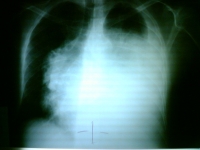
What’s the diagnosis?
A PET-CT was done:

What’s your diagnosis?
Thymic Carcinoma
Thymic carcinoma displays distinct morphology and biology, different in many ways from thymoma. It is composed of highly atypical cells with cytoarchitectural features of carcinoma similar to those seen in other organs. Although many lymphocytes can be seen in its stroma, they are of B cell type and mature T cell type; thymic carcinoma lacks the immature T cell lymphocytes of thymoma.
Thymic carcinoma is classically not associated with paraneoplastic syndromes such as myasthenia gravis. However, one study reported 22 cases of primary thymic epithelial neoplasms which showed combined features of thymoma and thymic carcinoma; the carcinoma and thymoma were either found synchronously, or carcinoma developed with a preexisting thymoma after 10 to 14 years.
Incidence Primary thymic carcinoma is a rare neoplasm. At the National Cancer Center of Tokyo, 17 cases were resected over a 29 year period, during which time 79 thymomas and 2500 lung cancers were treated.
Clinical and radiographic manifestations Primary thymic carcinoma is a tumor of adulthood (mean age of 46 to 54 years). Most patients complain of chest symptoms, including pain, cough, superior vena cava syndrome, or general symptoms such as fatigue, weight loss, anorexia; fewer than 10% of patients are asymptomatic. Chest radiographs and computed tomography show an anterior mediastinal mass infiltrating along the pleura or mediastinum, with frequent necrosis or rare calcifications.
Regards,
Gerardo Morales, M.D.
technorati tags: thymic carcinoma, mediastinal mass, mediastinum, cough, chest pain, dyspnea, chest x-ray, superior vena cava syndrome, xray, x-ray, PET-CT, PET scan, medicine, unbounded medicine, unboundedmedicine
Mesothelioma DVD
Posted in Fast Facts, Medical Images | 3 Comments »
December 5th, 2005


Regards,
Jon Mikel Iñarritu, M.D.
technorati tags: left bowel obstruction, mechanical obstruction, diverticulitis, intestinal obstruction, surgery, acute abdomen, abdominal, medicine, medicina, unbounded medicine
Posted in Medical Images | 2 Comments »
November 28th, 2005
Via AACE from J Davidson, P Jellinger, L Blonde, H Lebovitz, C Parkin (2005):
The new position statement is this: Even if the initial A1C is from 6 to 7%, you should start pharmacotherapy.
This aggressive treatment has proved that mortality diminishes considerably.
Regards,
Jon Mikel Iñarritu, M.D.
technorati tags: diabetes, diabetes mellitus, A1C, AACE guidelines, guidelines, pharmacotherapy, medicina, unbounded medicine, medicine
Posted in Fast Facts | No Comments »
November 18th, 2005
Boston Scientific ENTERYX Procedure Kits and Injector Single Packs .
via FDA Safety I nformation Alerts:
For those who haven’t consider endoscopic procdedures for the treatment of GERD, well, at least, you shouldn’t think in Enteryx treatment.
FDA and Boston Scientific notified healthcare professionals and patients about serious adverse events, including death, occurring in patients treated with ENTERYX, a liquid chemical polymer which is intended to be injected into the lower esophageal sphincter for treatment of gastroesophageal reflux disease. The serious adverse events involve unrecognized transmural injections of ENTERYX into structures surrounding the esophagus. On September 23, 2005, Boston Scientific issued a recall of all ENTERYX Procedure Kits and ENTERYX Injector Single Packs from commercial distribution. Physicians should stop injecting ENTERYX immediately and follow the manufacturer’s procedures for returning unused product. FDA also provided recommendations on avoiding future occurrences and advice for patients.
Last month, Aggravated Doc Surg has made an excellent review of this treatments and recalls.
Regards,
Jon Mikel Iñarritu, M.D.
Posted in Medlinks | No Comments »
November 16th, 2005
This week’s Grand Rounds is hosted by Doc Shazam, she starts with a nice gruop categorization, the conclusion of this roundup is to let us know that in medicine’s blogsphere there is not all about medicine. Here we have the categories.
- Specific Diseases
- Training
- Technology
- Ethics
- Humor
- Delivery
- Geek Stuff
- Psychology
- Medical Trivia, and
- Narrative
So please, be sure to visit her site and stay up-to-date in all the medical blogs.
Next week’s Grand Rounds, will be hosted by CodeBlog, tales from a nurse. Please, submit your stories.
Regards,
Jon Mikel Iñarritu, M.D.
technorati tags: grand rounds, medicalblogsphere, medical blogs, medicine, medblogs, medicina, unbounded medicine
Posted in Medlinks | No Comments »
November 12th, 2005
via Reuters Health and Headache 2005;45:973-982:
National Headache Foundation guidelines for abortive treatment of migraine aren’t right?
This study states that the combination of acetaminophen, aspirin, and caffeine (AAC) is superior to sumatriptan in migraine’s early treatment.
Goldstein et al, compared the combination treatment with 50mg sumatriptan in 171 subjects treated when the first symptoms ofmigraine occurred. Patients taking AAC experienced significantly greater pain intensityreduction than did those taking sumatriptan beginning 2 hours afterdosing and continuing throughout the 4-hour treatment period.
More patients in the AAC group experienced a sustained response and fewer patients in the AAC group required rescuemedication by 4 hours postdose.
This results suggests that migraine sufferers can use AACto treat their migraine episodes at the first sign of an attack.
In my very own personal experience i’ll rather preffer to use Sumatriptan. What do you think?
Regards,
Jon Mikel Iñarritu, M.D.
technorati tags: migraine, acetaminophen, paracetamol, aspirin, aspirina, caffeine, cafeina, headache, clinical trial, unbounded medicine, medicine, medicina, sumatriptan
Posted in Medlinks | 7 Comments »
November 9th, 2005
We all know those evidence linking OSA to systemic hypertension (even if your patient is not obese), because the vasoconstriction and activation of renin-angiotensin-aldosterone axis. But now there is new evidence that OSA is an important risk factor for stroke.
A new observational cohort study of NEJM by Yaggi et al, states that OSA increases significantly the risk of stroke, TIA or sudden death.
REFERENCES:
Yaggi HK, Concato J, Kernan WN, Lichtman JH, Brass LM, Mohsenin V.Obstructive sleep apnea as a risk factor for stroke and death. N Engl JMed 2005;353:2034-2041.
Regards,
Jon Mikel Iñarritu, M.D.
technorati tags: sleep obstructive apnea, stroke, death, OSA, NEJM, medical articles, Yaggi, medicine, unbounded medicine, sleep disorders
Posted in Medlinks | 1 Comment »